

No headings found
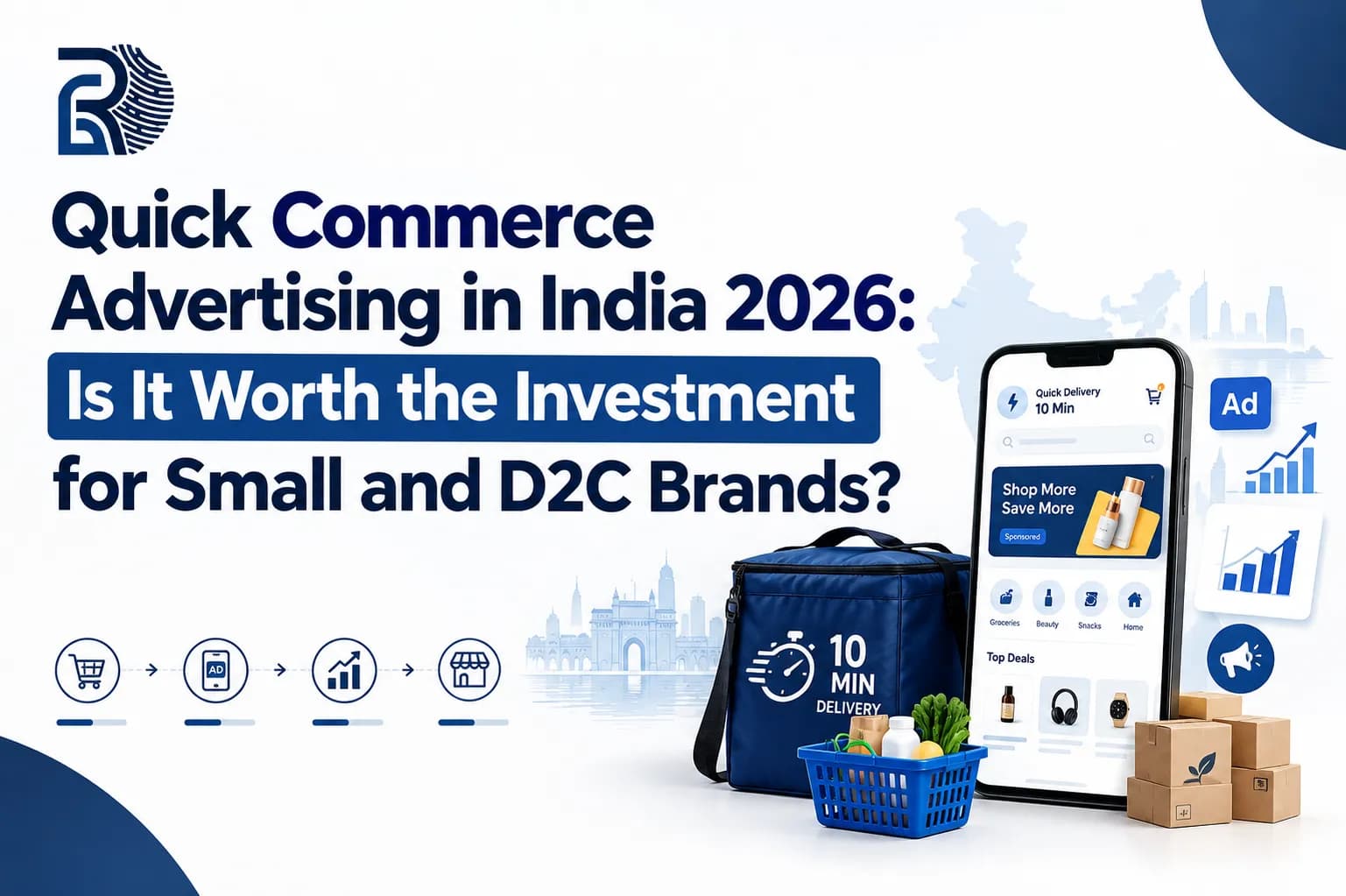
Quick commerce advertising has gone from an experimental budget line to a serious strategic decision for Indian brands in a remarkably short time. According to the Pitch Madison Advertising Report 2026, quick commerce ad spend in India is projected to hit ₹6,000 crore this calendar year, up from just ₹1,325 crore in 2024. That is nearly a fivefold increase in two years. Blinkit and Zepto both crossed ₹1,000 crore in annual advertising revenue by FY25, and combined platform ad revenues from Blinkit, Zepto, and Swiggy Instamart are expected to touch ₹4,900 crore by the end of 2026. For D2C brands and small businesses evaluating where to put their next marketing rupee, this creates a genuinely difficult question. If you are working with an ecommerce digital marketing agency or managing your own digital spend, quick commerce advertising demands a more nuanced answer than the headline numbers suggest. This article breaks down what is actually happening, what the platforms offer, and when the investment makes sense versus when it does not. The core insight driving quick commerce advertising’s growth is straightforward but significant. On Meta or Google, a user sees an ad and may purchase the product days or even weeks later, after researching alternatives, comparing prices, and returning to the decision. The funnel is long and leaky. On Blinkit, Zepto, or Swiggy Instamart, that funnel collapses almost entirely. A user opens the app because they need something. They find a sponsored listing, they add to cart, and they complete the purchase before leaving the session. Industry observers have noted that brands running on quick commerce platforms are seeing 1.5 to 2x ROAS compared to equivalent Meta and Google spends, precisely because intent and purchase happen at the same moment. Blinkit’s ad revenue grew 220 percent year-on-year, faster than even its order volume grew, which tells you how much brands are recognising this dynamic. Advertising is now approximately 15 percent of Blinkit’s total revenue. These platforms have quietly become some of the most intent-dense advertising surfaces in India. Understanding the scale difference between the three major platforms matters before deciding where to allocate budget. Blinkit leads on order volume, having processed over 916 million orders in FY26, with revenue of ₹37,779 crore. Its average order value stands at approximately ₹525. Zepto processed roughly 640 million orders with revenue of ₹22,623 crore and a lower average order value of around ₹330. Swiggy Instamart trails significantly at 412 million orders and ₹3,859 crore in revenue, but has the highest average order value at approximately ₹700, suggesting a higher-intent, higher-spend consumer profile. For advertisers, these differences matter. Blinkit offers scale and reach. Zepto, interestingly, earned more from advertising in FY26 than it spent on its own advertising, suggesting it has become more a media platform than a pure grocery service. Instamart’s smaller but higher-spending consumer base makes it particularly relevant for premium and lifestyle D2C brands. D2C and FMCG brands have already responded to this landscape by increasing their quick commerce ad spends from 5 percent of digital budgets to between 15 and 20 percent in just one year. The excitement around quick commerce advertising is legitimate, but the challenges for smaller and bootstrapped brands are also real and increasingly documented. The ROAS trap is the most important to understand. Both Zepto and Swiggy Instamart have been reported to calculate ROAS in their dashboards using Maximum Retail Price rather than the actual selling price after platform discounts. This means the return on ad spend displayed can look significantly healthier than the actual margin-adjusted return. Any brand, or any ecommerce digital marketing agency running campaigns on their behalf, needs to reconcile platform ROAS with actual revenue at the selling price, not MRP. Ad fee escalation and limited data transparency remain serious concerns. D2C founders have publicly highlighted that quick commerce platform ad fees have continued to increase while access to consumer behaviour data remains limited. Sonalika Sabharwal, founder of SouLilly Toys, noted that ad fees have escalated alongside opacity on consumer data. For bootstrapped brands, making spend decisions without reliable data on conversion rates, keyword performance, and consumer behaviour by city is a meaningful disadvantage. Dark store inventory requirements create a structural barrier. Quick commerce runs on dark stores positioned close to consumers, and brands need to supply these stores consistently to remain visible and eligible for advertising. For small brands without the logistics infrastructure to maintain consistent dark store inventory across multiple cities, advertising spend can be wasted when a product is out of stock in the relevant area. Brand differentiation becomes harder. When D2C brands appear on quick commerce platforms, everything is centred on convenience, speed, and price. The ability to tell a brand story, demonstrate product differentiation, or build emotional connection, which is typically handled through custom ecommerce website development services and owned digital channels, is significantly compressed on a quick commerce interface. Products become highly comparable and price sensitivity increases. Despite the risks, there are clear scenarios where quick commerce advertising generates strong returns. High-frequency, replenishment-driven categories are the sweet spot. Brands in personal care, nutrition, snacking, beverages, and household essentials benefit most from quick commerce advertising because their products align naturally with the replenishment buying behaviour that drives most quick commerce orders. A consumer who buys a specific protein powder repeatedly is exactly the kind of buyer that sponsored listings re-capture effectively. Cities with high dark store density provide more reliable campaign outcomes. Blinkit operates at scale across major metros and is expanding rapidly into tier-2 cities. Concentrating initial quick commerce ad spend in cities where the platform has deep dark store coverage reduces the inventory availability risk and improves the reliability of campaign data. Quick commerce works best as a complement to owned channels. Brands that have invested in custom ecommerce website development services and maintained direct consumer relationships through their own platforms use quick commerce advertising to capture the impulse purchase moment without abandoning the brand building that happens on owned channels. The combination, owned platform for loyalty and story, quick commerce for instant-need capture, produces better long-term economics than either alone. Adequate budget for meaningful testing is non-negotiable. Several bootstrapped founders have noted that their reluctance to enter quick commerce platforms stems from insufficient budget to test at the volume needed to generate useful data. Quick commerce platforms provide better ROI data at scale. Brands entering with minimal budgets often cannot distinguish between poor campaign performance and insufficient spend. An important consideration for D2C brands evaluating their ecommerce advertising mix in 2026 is how quick commerce fits alongside established marketplaces like Amazon. Amazon seller management services address a different but complementary part of the purchase journey. Amazon customers typically engage in longer research cycles, compare products in detail, and purchase at higher consideration levels. Quick commerce captures the impulse and replenishment layer. For brands selling across both channels, the advertising strategies need to be co-ordinated rather than treated as separate budgets. A consumer who discovers a brand on Amazon and then encounters it again on Blinkit is receiving a reinforced impression. Managing this cross-channel presence effectively, including keyword strategy, listing optimisation, and budget allocation, is where working with an experienced ecommerce digital marketing agency provides compounding value that in-house teams often struggle to replicate at scale. Before committing to quick commerce advertising, D2C brands should work through four questions. Is the product category one that consumers replenish regularly or buy on impulse? If yes, quick commerce advertising will likely find a receptive audience. If the product is considered or researched, the conversion case is weaker. Does the brand have the logistics capability to maintain consistent inventory in dark stores across target cities? Advertising without reliable inventory availability generates spend with no corresponding conversion. Is the brand in a position to track actual selling price ROAS rather than platform-reported MRP-based ROAS? If not, the data available from the platform will not be trustworthy enough to make optimisation decisions. Does the brand have a budget to test for at least two to three months at meaningful daily spends? Brands that cannot sustain this testing period are unlikely to accumulate the data needed to optimise effectively. Rapid Digital Growth works with D2C, B2B brands navigating exactly this decision, helping teams structure quick commerce advertising strategies that account for real margin economics, inventory constraints, and cross-channel considerations. The quick commerce opportunity is real in 2026, but the brands extracting value from it are those treating it as a disciplined performance channel rather than a trend to follow. Quick commerce advertising in India has reached a scale that makes it impossible to ignore. Quick commerce ADEX grew from ₹1,325 crore in 2024 to a projected ₹6,000 crore in 2026, and the platforms themselves have become high-intent advertising surfaces where the gap between discovery and purchase has collapsed to minutes. D2C and FMCG brands have increased their quick commerce ad spends from 5 to 15-20 percent of digital budgets in just one year. For D2C brands and small businesses, the investment is worth exploring if the product category aligns, the logistics foundation is in place, and the brand can track genuine margin-adjusted returns rather than platform-reported metrics. For brands without these conditions in place, the better first step is investing in custom ecommerce website development services and owned channel infrastructure before diverting budget to platforms where brand control is limited and fees are rising. Rapid Digital Growth helps brands across both paths, whether that is structuring quick commerce campaigns that account for real economics or building the owned digital foundation that makes every advertising channel more effective over time.What Makes Quick Commerce Advertising Structurally Different from Meta and Google
The Numbers Behind the Three Major Platforms in 2026
The Real Risks That Small and D2C Brands Need to Understand
When Quick Commerce Advertising Actually Makes Sense for D2C Brands
The Role of Amazon Seller Management Services in the Quick Commerce Context
A Practical Decision Framework for 2026
Conclusion
 Advertising
OpenAI has launched ChatGPT Ads in India for Free and Go users. Here’s what businesses need to know about ChatGPT Ads, Ads Manager, budgets, and how to run campaigns.
Read More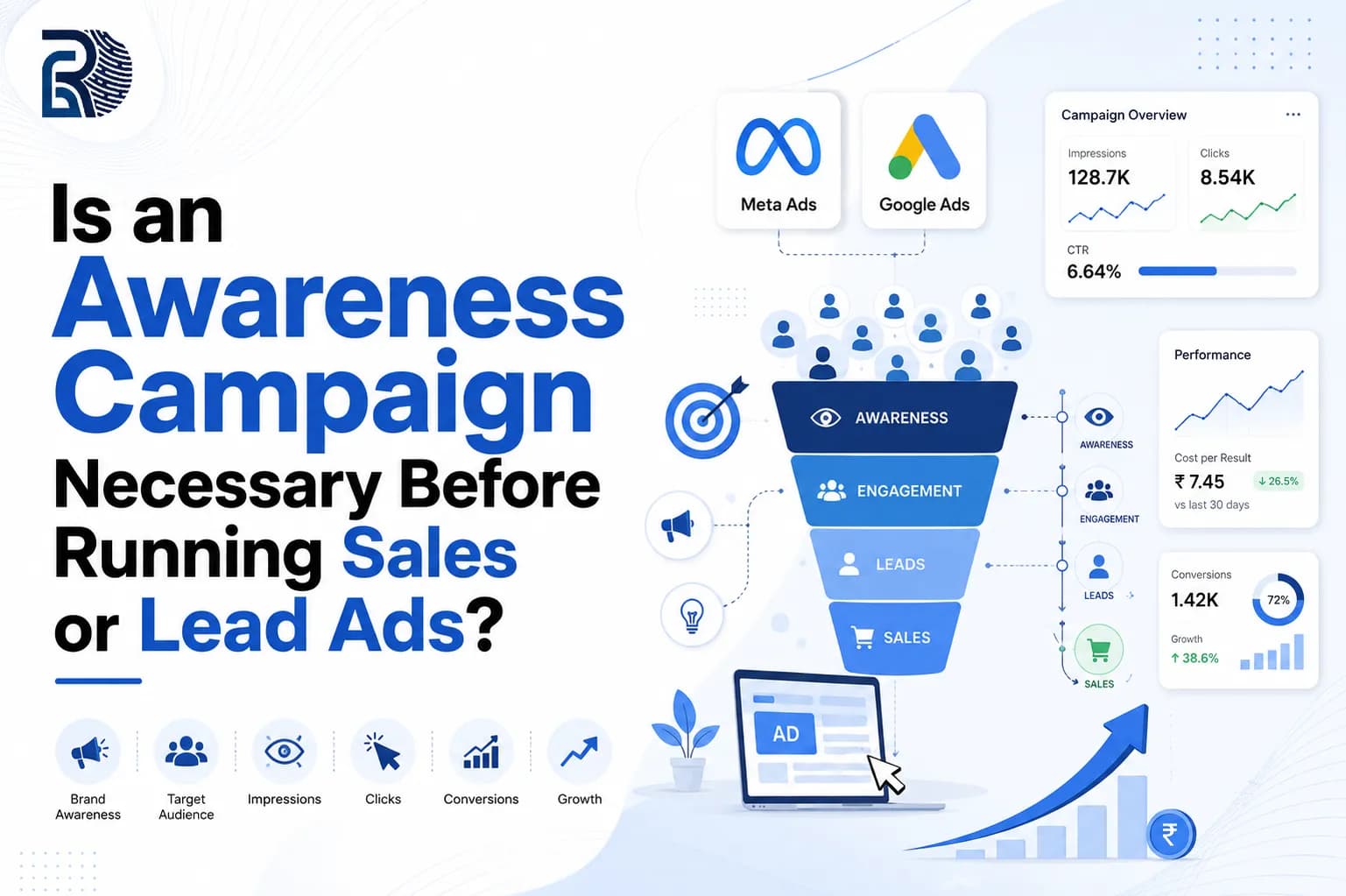 Advertising
Should you run awareness campaigns before sales or lead ads? Learn when it matters, when to skip it, and how to build a smarter ad funnel strategy.
Read More Advertising
JioHotstar launches self-serve ads, giving brands direct access to premium OTT inventory. Here's what it means for performance marketers in India.
Read More