

No headings found
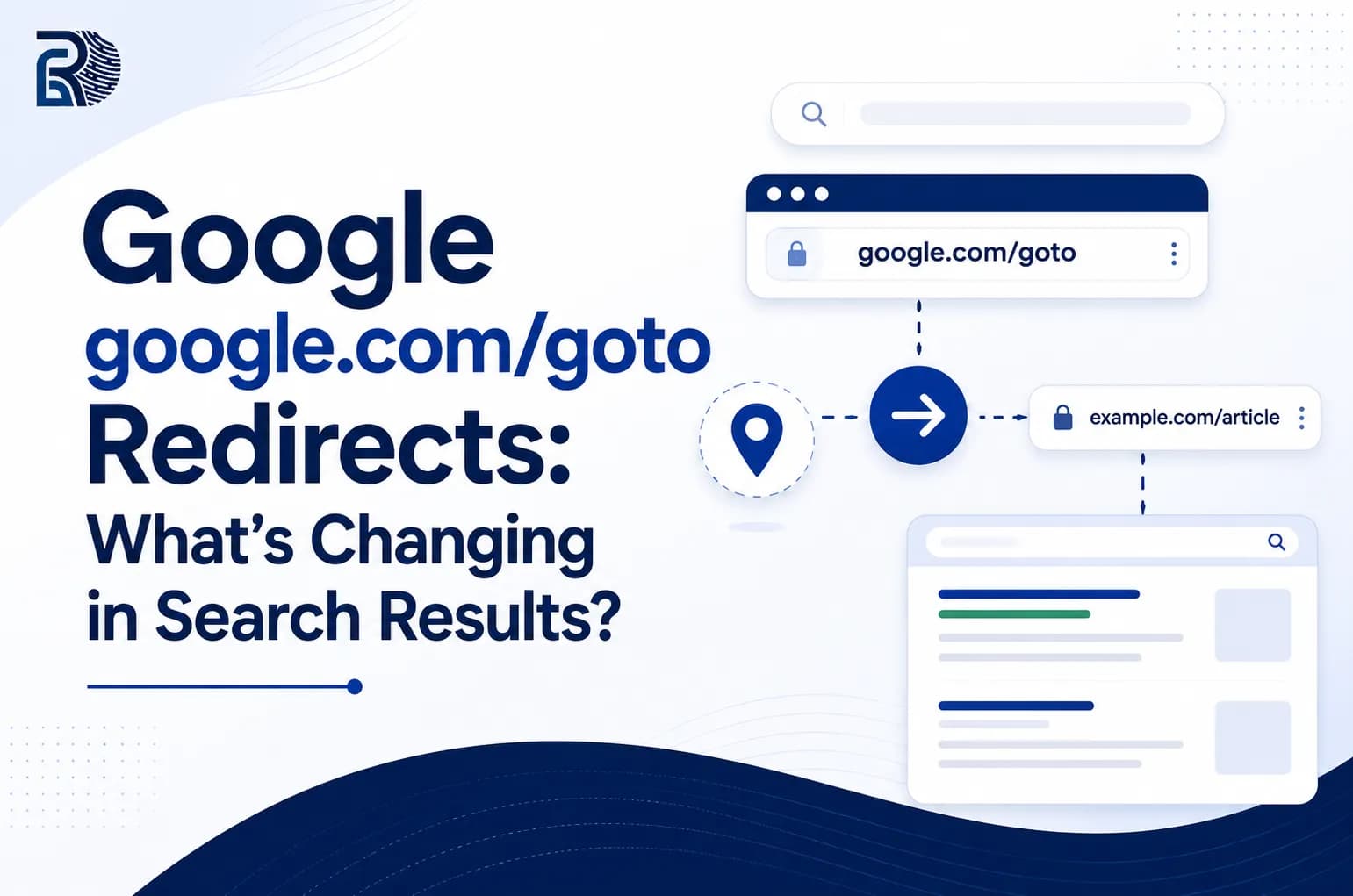
If you've hovered over a Google Search result recently and noticed the link points to google.com/goto instead of the site itself, you're not imagining it. Google has confirmed it is rolling out goto redirects across Search, and SEO professionals are watching closely to understand what it means for rankings, tracking, and scraping.
Google.com/goto is a passthrough URL that now appears on many Search result links instead of a direct link to the destination page. Clicking a result routes you through a google.com/goto address with an encoded parameter before landing on the actual page. The destination URL still displays as text beneath each result's title, so searchers can see where a link leads even though the clickable link itself is now indirect.
Search Engine Roundtable first reported tests of this pattern in June and July 2026, and confirmed on August 26, 2026 that Google had moved it toward a much broader rollout.
Goto URL

Traditional URL
Confirmed: A Google spokesperson told Search Engine Roundtable and Search Engine Land that the company regularly deploys technical measures against evolving forms of abuse to protect its services and users. Google has not published an official blog post or Search Central documentation naming goto redirects specifically, and has not stated a specific purpose beyond that general comment.
Industry analysis: SEO professionals, including rank-tracking company Nozzle, have linked the change to Google's ongoing effort to make large-scale scraping of Search results more difficult for third-party tools and AI companies. This interpretation is plausible given the timing and Google's prior legal action against scraping tool SerpApi, but it remains an inference rather than a confirmed Google statement.
There is currently no evidence that goto redirects change how Google ranks, crawls, or indexes pages. The redirect affects only the clickable link presented to users in the search results page itself, not the underlying ranking systems, crawling infrastructure, or Search Console data. Website owners do not need to add redirect rules, edit site code, or change canonical tags because of this update.
For most searchers, the experience of clicking a result and reaching a page is unchanged. The practical effect falls mainly on third-party tools: rank trackers, SEO scraping platforms, and automated tools that read Search result pages now have to follow each goto link individually to determine the destination, rather than reading the URL directly from the page. Some SEO tool providers have already indicated they can detect and adapt to the new pattern.
This appears to be a reasonable interpretation based on context, but it is not something Google has explicitly confirmed. Google's own comment referenced general "technical measures against evolving forms of abuse" rather than naming scraping, SerpApi, or AI tools directly. Treat the anti-scraping explanation as informed industry analysis, not an official statement.
This isn't the first time Google has adjusted Search's link behavior in response to abuse or scale concerns, and it likely won't be the last. As AI tools and scrapers pull increasing volumes of data from Search results pages, further technical changes of this kind are plausible, even if Google doesn't always announce them in advance.
Google's rollout of google.com/goto redirects marks a confirmed change to how Search result links function, even though Google's public explanation remains general. What's clear: destination URLs are still visible to searchers, and there's no evidence of ranking, indexing, or traffic impact tied to this change. What's inferred: many in the SEO industry believe this is aimed at making scraping and automated data collection harder. Website owners can treat this as a background technical change worth monitoring rather than one requiring immediate action.
 SEO
SEOChoosing an SEO agency in Saudi Arabia? Learn the market-specific factors, from bilingual content to local search behavior, that actually predict results.
Read More SEO
SEODiscover why SEO strategies collapse after every Google update, the hidden fragility most sites carry, and how to build an update-proof SEO strategy.
Read More SEO
SEOStruggling with low rankings? Find out why ecommerce stores lose visibility in search results and how to build lasting organic growth with SEO.
Read More