

No headings found
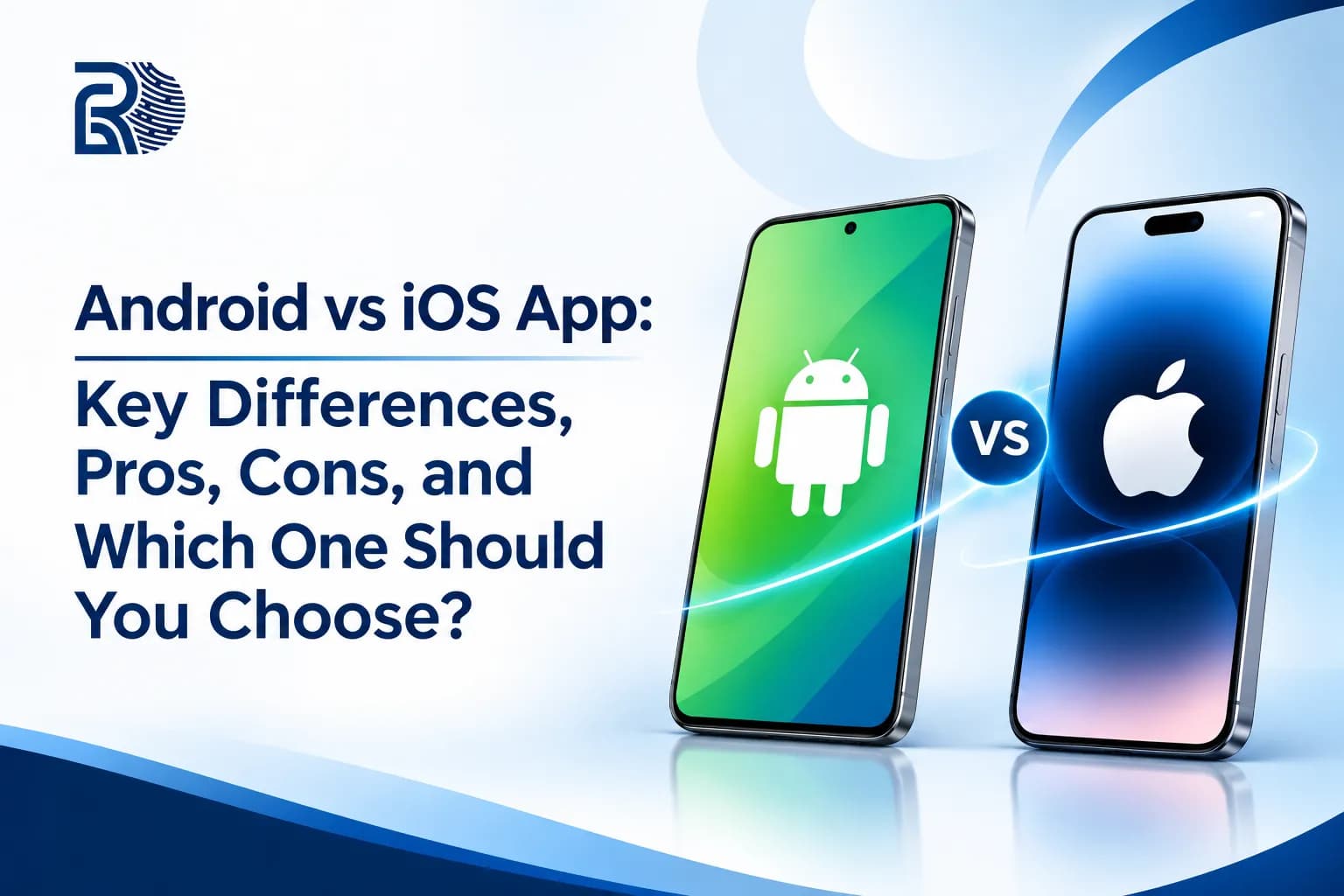
The smartphone market in India tells a clear story about where people are placing their trust and money. As of 2027, Android commands approximately 95 percent of India's smartphone market, while iPhone holds around 4 to 5 percent. Yet Apple's revenue from India has been growing faster than in almost any other market globally, with iPhone shipments crossing 10 million units in a single financial year for the first time in FY2024-25. These two numbers coexist because the question is not which platform is winning. Which user is the platform winning for?
This matters beyond the consumer choice itself. For businesses building mobile apps, understanding where their users live, what platform preferences look like across income segments, and how each platform's technical characteristics affect development is as important as the choice users make for personal use. Whether you are a consumer deciding your next purchase or an organisation evaluating platforms for an app build, the Android vs iPhone conversation has real practical stakes.
The global smartphone market averages around a 72 to 73 percent Android share. India is an outlier at 95 percent because the country's smartphone adoption has been driven primarily by affordable devices, and Android's open ecosystem allows manufacturers such as Samsung, Xiaomi, Realme, Vivo, OPPO, and OnePlus to build competitive devices across every price tier from under Rs 10,000 to premium flagships.
The iPhone, by contrast, starts at Rs 50,000 or above for new models in India, placing it firmly in the premium segment. This price differential has historically kept iPhone penetration low even as aspirational demand remained high. The introduction of iPhone manufacturing in India through Foxconn and Tata has begun to change the import cost structure, but the premium positioning remains intact.
For Indian consumers, the Android vs. iPhone decision is therefore not purely a features comparison. It is a value-for-money question that plays out at dramatically different price points.
Android's primary strengths are customisation, hardware variety, and price accessibility. The open nature of Android allows manufacturers and users to modify the experience significantly. Users can change default apps, install launchers that completely transform the interface, sideload applications outside the Play Store, and connect easily to external storage. For power users and technically inclined individuals, this flexibility is genuinely valuable.
The hardware diversity is both a strength and a limitation. At the same Rs 30,000 to Rs 40,000 price point, an Android device in 2027 can deliver a significantly more powerful chip, more RAM, faster charging, and more camera hardware than what an iPhone offers at the same price. The sheer competition between Android OEMs keeps performance per rupee extremely high.
Where Android struggles is consistency. Because Android runs across hundreds of device configurations from dozens of manufacturers, the same application can behave differently on a Samsung Galaxy than on a Xiaomi Redmi. Security update distribution is fragmented across manufacturers, meaning many Android devices receive major operating system updates months after Google releases them, if at all. Devices running Android at the lower end of the price spectrum also face meaningful performance degradation over two to three years.
For businesses working with an Android app development company in India, this fragmentation is a real development consideration. Testing across the most common screen sizes, Android versions, and hardware configurations is a larger investment than testing on a constrained ecosystem.
Apple's primary strength is integration and longevity. iPhones receive operating system updates for five to six years from release, which means a user buying an iPhone today has a device that will be meaningfully supported until 2031 or later. The hardware-software integration, with Apple designing both the chip and the operating system, produces consistent performance that most Android devices at equivalent or even higher prices cannot match for extended periods.
The ecosystem is Apple's most effective retention mechanism. For users already within the Apple ecosystem, iMessage, AirDrop, Apple Watch, MacBook, iPad, and iCloud integration create a connected experience that Android, without equivalent hardware control, cannot fully replicate.
iPhones also receive new operating system features uniformly across all supported devices on the same day. An iPhone 15 in Chennai and an iPhone 16 in Delhi running iOS 18 have the same feature set, the same security patches, and the same application compatibility.
The obvious limitation is price. The entry point for iPhone in India remains high relative to the median consumer's budget, and Apple's hardware repair and accessory costs are significantly above Android equivalents. The ecosystem lock-in that is a strength for committed Apple users is a friction barrier for anyone who wants to leave.
For businesses working with an iOS app development company in India, the constrained hardware and software environment is actually an advantage: testing against a smaller set of device configurations is less expensive, and the demographic of iPhone users tends to skew toward higher disposable income, which matters for apps with monetisation models built on in-app purchases or subscriptions.
Camera performance is one of the most discussed dimensions of this comparison, and the honest answer in 2027 is that the gap has narrowed considerably at the high end while remaining significant in the mid-range.
Premium Android flagships from Samsung, Google Pixel, and OnePlus match or exceed iPhone camera performance on specific metrics. Pixel's computational photography is particularly strong in night photography. iPhone's video capabilities, particularly Cinematic Mode and ProRes recording on Pro models, remain ahead of most Android competition for professional video work.
For battery performance, Android has historically led in raw capacity and fast charging speeds on Android devices, with many now offering 65W to 120W charging, significantly outpacing the iPhone's comparatively modest charging speeds. Apple's approach to battery management prioritises longevity over charging speed, which is a reasonable trade-off but a visible one.
Processor performance on the latest iPhone models using Apple's own silicon chips leads the global smartphone market in single-core performance benchmarks. For applications that are computationally intensive, this is a real advantage. For everyday Indian usage patterns, the gap is less perceptible in practice.
For businesses evaluating which platform to build on first, the Indian market's demographic data provides a relatively clear signal.
An Android app development company in India is the right starting point for any business targeting volume, particularly in Tier 2 and Tier 3 cities where Android penetration approaches 98 percent. Consumer apps, vernacular content platforms, fintech apps targeting mass market users, and hyperlocal services all build Android first because that is where the users are.
An iOS app development company in India becomes the right priority for businesses targeting the urban premium segment, international users (where iPhone share is 20 to 25 percent globally), or categories where high-value transactions are the core use case. Premium e-commerce, wealth management applications, and enterprise tools often see stronger revenue per user on iOS despite smaller user volumes.
The most robust strategy for Indian businesses with the resources to execute it is cross-platform development using React Native or Flutter, which Rapid Digital Growth uses as the default approach for clients who need to serve both user bases without maintaining fully separate codebases. This approach reduces development time while delivering a native-quality experience on both platforms.
Rapid Digital Growth's experience building Android app development solutions across diverse Indian market contexts, from quick commerce platforms to healthcare apps and enterprise tools, informs a view that platform choice should always follow user research rather than developer preference.
For individual consumers making a personal decision, the following framework resolves most cases cleanly.
If budget is the primary constraint, Android at any price tier delivers compelling value that iPhone cannot match. A Rs 20,000 Android device in 2027 is a genuinely capable smartphone. There is no iPhone equivalent at that price.
If long-term support, security, and ecosystem integration across Apple devices are the priority, the iPhone justifies its premium for users who value these things and have the budget for them.
If camera quality and video production are central to the use case, the specific models under consideration matter more than the platform. Both platforms have flagships that compete seriously in this category.
If customisation, hardware flexibility, and technology exploration are the priorities, Android is the clear choice.
For most Indian consumers choosing between Android and iPhone purely on user experience at comparable price points above Rs 50,000, the gap has narrowed to the point where the decision often comes down to ecosystem and ecosystem-adjacent preferences rather than a clear performance winner.
Android and iPhone are not competing for the same customer in India, and the data reflects this clearly. Android owns the volume; iPhone is growing its share of the premium segment and doing so faster than almost anywhere else globally.
For consumers, the decision should be led by budget, ecosystem preference, and use case rather than brand loyalty. For businesses building mobile applications, the platform decision should be led by where the target user lives, what the monetisation model requires, and what development approach best fits the team's capability and timeline.
Rapid Digital Growth works with businesses across India on both Android app development solutions and iOS app development to build products that serve their actual user base, with cross-platform development as the default recommendation wherever both platforms are relevant. If you are evaluating which platform to build on first or how to reach both Android and iPhone users efficiently, understanding your users' device profile is always the right starting point.
 APP Development
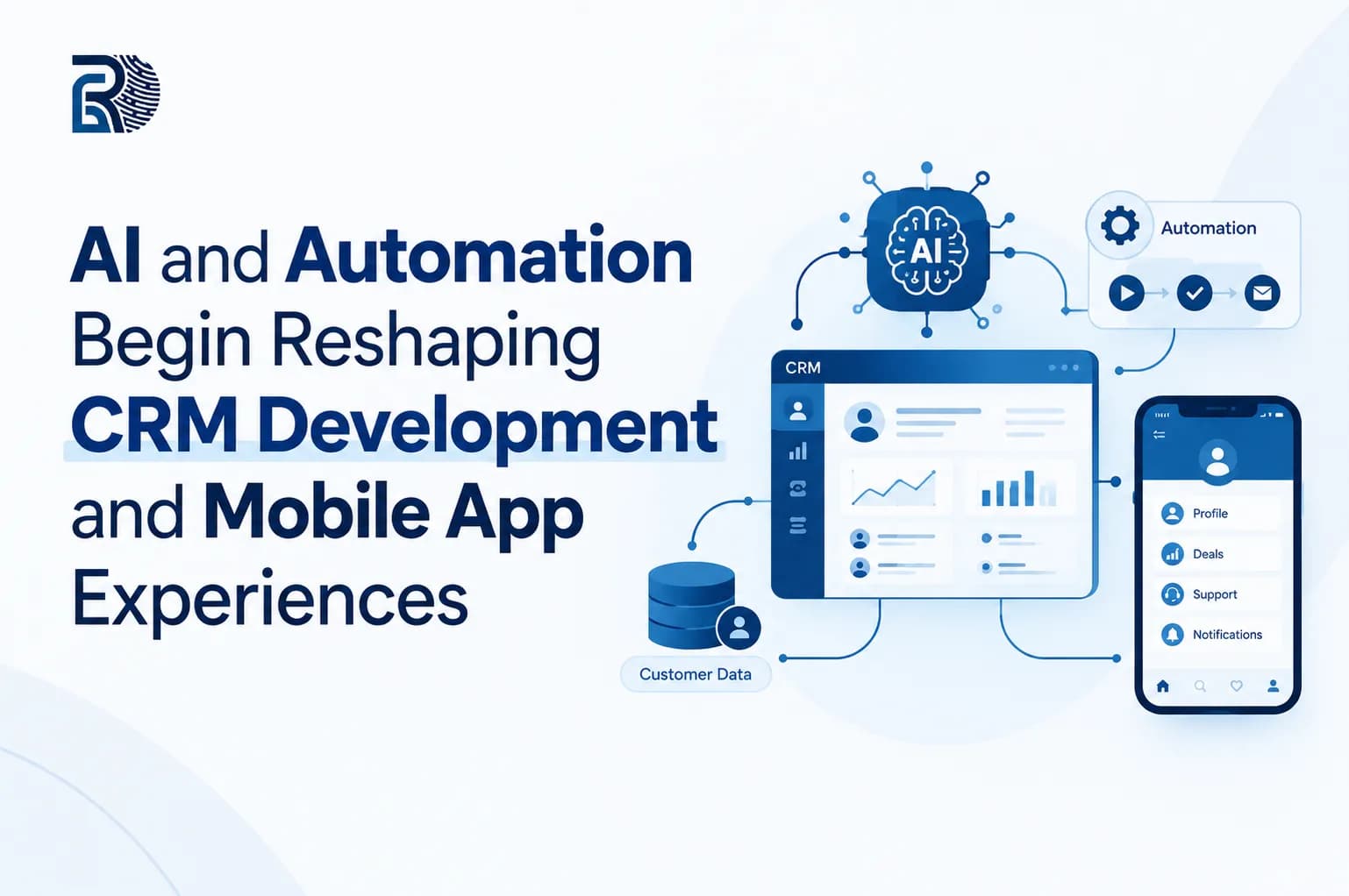
CRM development and mobile app development are converging fast, driven by AI agents and automation. Here's what's actually changing and what it means for you.
Read More