Table of Contents
How Do AI SEO Services Solve Common Keyword Research Problems for Startups?
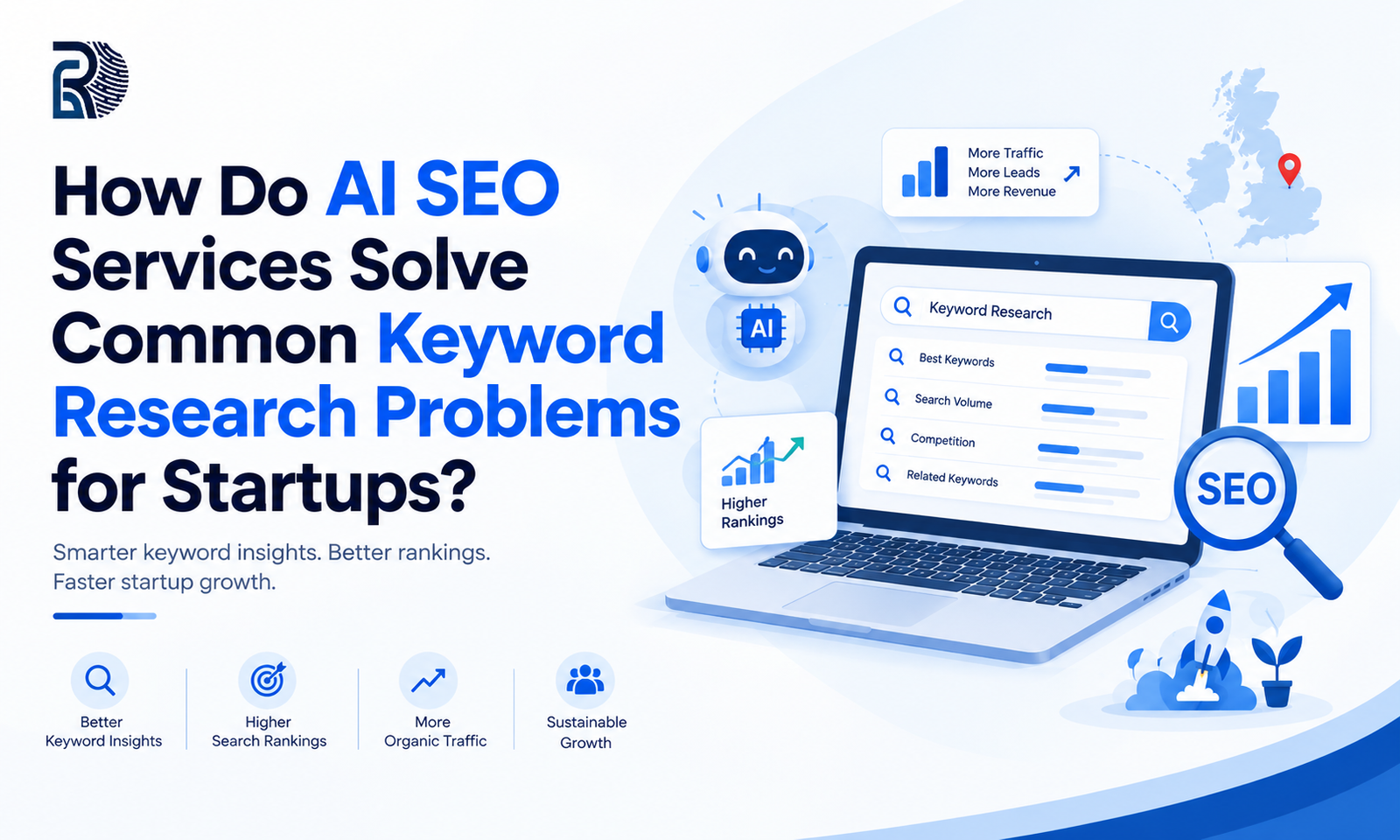
Startups approach keyword research from a genuinely different starting point than established businesses. There are no years of ranking history to analyze, no existing content library to build from, and often no dedicated SEO hire to interpret the data even if it were available. Traditional keyword research methods, built around tools and workflows designed for teams with more time and more historical data, frequently leave startups guessing at which keywords are actually worth pursuing. This is exactly the gap AI SEO services have started closing, not by replacing strategic judgment, but by solving specific research problems that traditional methods handle poorly for early-stage companies.
This article looks at the recurring keyword research problems startups face, and how SEO centric AI tools and approaches address them more effectively than manual research alone.
Why Traditional Keyword Research Methods Struggle for Startups Specifically
Most keyword research methodologies require a basic set of assumptions: there should be some traffic data to review first, some content to add to, and a good amount of time to comb through a hundred or more variations with a variety of tools. In the first few months, startups do not enjoy any of these benefits, so research methods geared toward mature organizations can yield false conclusions or recommendations that are difficult to implement in a newly founded company without any ranking history.
This imbalance is what leads to the familiar issues that startups face: pursuing keywords that have a high search volume but a level of competition that is not realistic, not being able to see the long-tail keywords that have a high-value proposition, and struggling to choose among all the content ideas that are available.
The keywords that startups face with their recurring problems
Trouble knowing whether realistic opportunities are available or if we wish for something that isn't. If the startup does not already have domain authority, it may be competing for keywords that it simply isn't going to be able to get ranked for in the near term, wasting a resource like content that could be used elsewhere.
Lack of time and skill to analyze raw keyword data. While traditional keyword tools can deliver a lot of information, not all of it is relevant, and determining which ones are and what impact they'll have on a startup's niche and authority level requires knowledge that many startups don't have in-house.
Lack of intent nuance in the surface-level volume of a keyword: A keyword with good search volumes may attract more informational searchers, with little to no intent to purchase, and a lower-volume keyword in the same vicinity of the higher-volume keyword could be much more ready to convert. The distinction is very difficult to make by hand for hundreds of keywords, and easily missed.
Having a hard time prioritizing a content roadmap with too many keywords. Once keyword information is collected, however, the strategic challenge of choosing a "first page" remains: the top page is not necessarily the first, and there is a difference between having keywords and writing them and actually having the resources to write something that has realistic ranking potential, business relevance, and is actually feasible.
Understanding how AI SEO Services handle each of these issues.The understanding of how AI SEO Services solve each of these issues.
AI-powered analysis can analyze a far greater volume of keywords in terms of ranking difficulty than manual analysis, identifying keywords where the authority level of a startup has a realistic chance at ranking and not just aspirational keywords dominated by big players.
Quick interpretation of complex keyword data at scale: AI SEO services can analyze, categorize, and prioritize all the data in a matter of weeks, whereas the ability to cross-reference volume, difficulty, and relevance across hundreds of terms manually takes a dedicated analyst from scratch.
Identification of intent-matched long-tail opportunities: AI-driven keyword analysis works well at identifying variations of long-tail keywords that closely align with buyer intent, and this would be impossible for a person to find given the number of variations in all long-tail keywords.
Realistic near-term impact-driven content prioritization: AI-driven prioritization can transform a daunting list of keyword ideas into a realistic content plan that is truly actionable, prioritizing topics according to relevance, realistic ranking opportunities, and business value.
What AI SEO Services Will Not Do.
It is important to remember that there are definite restrictions here. The power of AI in handling large volumes of data to uncover patterns is very useful, especially when it comes to processing it faster than a human could do it on their own, but it isn't intended to replace the strategic business judgment of what topics are more relevant to your specific audience, nor the nuanced understanding of your positioning that can influence which keywords are genuinely worth targeting.
The best strategy is to use AI for data-hungry pattern recognition tasks and have founders and marketers add the human touch in the form of business context that AI cannot entirely replicate.
In this section, she will outline a practical approach for startups to leverage AI tools for keyword research. She will share a practical framework for how startups can use AI tools to conduct keyword research.
Don't begin with a blank page or only look at a few keywords manually – use AI tools to get a wide range of keywords in the beginning.
Use realistic authority-based filtering to differentiate between things you can do in the short term and those you can only aspire to in the long term.
Add intent analysis to prioritize keywords that are relevant to your particular stage of the buyer's journey.
Create a content roadmap that is broken down first by the content that's attainable (i.e., low competition) and then by the content that is more competitive (as authority increases).
Continuously revisit and update based on the business context, as there will be a need for business and product context judgment over AI-surfaced patterns.
Even with AI-assisted tools, startups often make some common mistakes. Despite the power of AI tools, some common pitfalls can befall startups.
Using AI-generated content as a last resort instead of a first resort for incorporating business context into the content.
Targeting high-volume keywords that the AI identifies as being available but unconfirmed to be actually relevant to the product or audience.
Passing up on the long-tail keywords for more popular, higher competition keywords.
Not reviewing and updating keyword priorities as the website's authority and content library expands.
Bringing It Together
Unlike conventional SEO strategies, which often struggle with certain common issues faced by startups, AI SEO services address specific challenges: unrealistic keyword targeting, data interpretation bottlenecks, missed intent-matched opportunities, and unclear content prioritization. When implemented as supporting and not supplanting sound business judgment, AI tools for SEO can provide early-stage businesses an actionable and accelerated way to gain meaningful search visibility that's more realistic.
For startups without a dedicated in-house SEO team and aiming to develop a realistic keyword strategy without the time and effort it typically takes to build from scratch, Rapid Digital Growth AI-powered keyword research and tailored guidance help you ensure the keywords you choose are the ones that will truly matter.