

No headings found
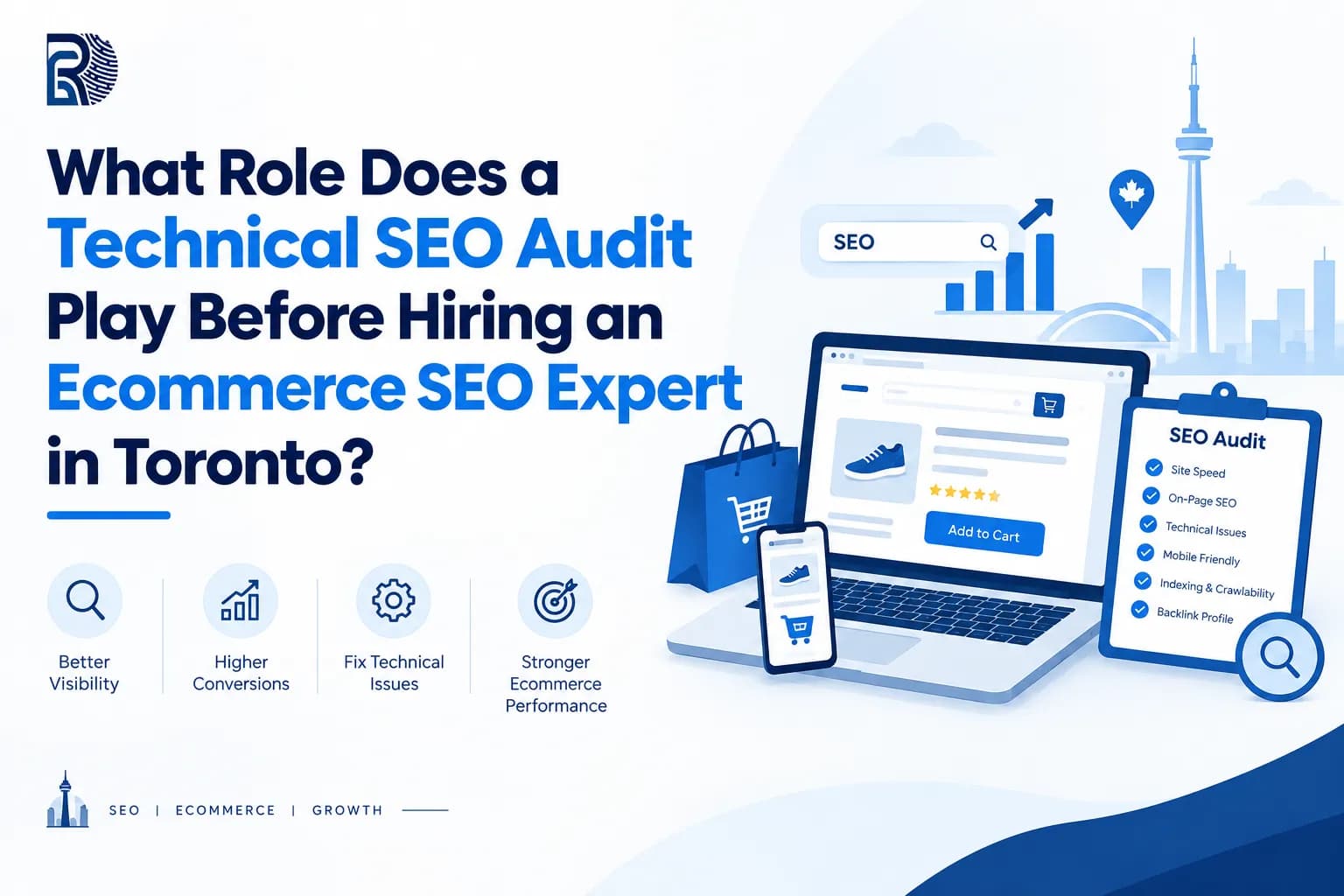
Two Toronto ecommerce businesses hire SEO help in the same month. One spends two weeks and a modest fee on a technical SEO audit first, then hires an ecommerce SEO expert Toronto who walks in already knowing exactly what's broken. The other skips straight to hiring based on a strong portfolio and a confident pitch. Six months later, the first business has fixed its three most urgent issues and is seeing early ranking movement. The second is still waiting on "discovery work" that's quietly eating through the first quarter of the retainer.
Same market, same budget range, wildly different outcomes. The difference isn't talent. It's sequencing, and understanding why the audit has to come first changes how you should approach this hiring decision entirely.
Completely different results in the same price range in the same market. It's not about talent. Sequencing it and knowing that the audit needs to be first will change the entire approach that you have to take to this hire.
What this means is that when you hire an SEO expert who doesn't have any audit data, the first few weeks of their discovery period are effectively unpaid for you, just because you're paying for it, and because you're paying for it, you are paying for the same amount of time you would pay to execute a strategy. You're essentially paying someone to do a trial investigation of issues that a targeted audit would have been able to uncover for a small fraction of the cost and time. There's one other, lesser-known expense as well. If they don't have audit results to compare their expertise to, you're relying on confidence and portfolio, and this isn't a lot of information to help you determine how they will deal with your particular technical situation. A generic website audit won't identify issues unique to ecommerce site construction. Through a proper technical SEO Toronto ecommerce site audit, problems will be revealed in these areas. Numerous filter URLs for each facet in a catalog, pagination that stealthily blocks search engine access to older pages, and pages with no links to them (orphan pages) are examples of these crawlability issues. Shopping-specific problems such as performance bottlenecks caused by shopping-specific elements like product image galleries, third party review and rating widgets, and shopping-specific checkout scripts that a generic speed test identifies as "slow" but does not identify which specific element is causing the delay. Near-duplicate pages caused by variant products with product variants (Color, size, region) often lead to duplicate or near-duplicate pages that receive the same ranking power, which is why it is best to consolidate ranking into one good, solid page. Structured data: Missing product schema: Your listings lack availability, star ratings or pricing information prominently in search results, which appears to be a gap when you compare your product listing with other businesses. Shopping friction To the extent that mobile users are responsible for the bulk of ecommerce traffic, clunky filters, slow mobile checkout, or poor product image scaling can be subtly killing your rankings and sales figures. Converting audit results into a more effective hiring process.Translation: Audit Results into a more effective hiring process. There have been times when I have had real findings, and the entire interview process takes a different form. Rather than asking process and experience-type questions, you can assess candidates on your own issues. For each candidate, give them your three top audit issues and have them explain how they would correct the issues, starting with the lowest priority issue and ending with the highest. Take note of what people are saying, not just how they sound. A true expert describes why one fix is more important than another, depending on the specifics of your data—not a generic flow chart. Instead of giving them generic assurances of ranking or traffic that aren't necessarily related to those problems, ask them how they will measure progress towards solving them. If they're a faceted ecommerce experience, they're not the same as a regular content-based website, so probe for real ecommerce experience. Compare their proposed timeline with the urgency ratings that are assigned to each of the audit's issues, and ensure that the highest priority issues are not simply deferred to a later stage of the audit. This moves the whole "who do I trust" question to "who's shown they truly understand my site", and that's a much better reason for making a hiring decision with real money. When This Step is Missed If a business fails to do the audit and just takes a business on reputation, they have two issues that they will face. Some experts audit the business in the first month of the retainer and charge much less than if the audit were conducted as a single event. Others, even experts, execute a general content site SEO method without considering the technical methods that can get catalog-driven ecommerce systems in trouble. Regardless, the business ends up losing time and money that it did not need to lose, just because the sequencing was reversed from the get-go. Have an e-commerce-specific technical SEO audit, instead of a site health check. Before conducting interviews, read the findings – even superficially. Take the results of the research to all candidate conversations, and solicit a specific response from each. Ensure that proposed engagement timelines adequately reflect the severity of any observed issues. Explain if it will include implementation support or if this is a standalone audit with implementation support being scoped later on. This is not an overly conservative measure; it's the step that makes a decision to hire based on trust turn into a decision made with evidence. If you are aware of the real crawlability, speed, duplicate content, and structured data issues on your site before you enter into a conversation with a hiring person, you have a fact-based conversation instead of a sales pitch. Before your next hire, you have the clarity you want with a technical SEO audit that focuses on ecommerce. Rapid Digital Growth gives you ecommerce technical SEO audits so you don't go into each candidate conversation blind, without knowing exactly what needs to be changed and why.Before you hire an SEO expert, you should make sure you know what the real problem is.
In the event of a Genuine Ecommerce-Focused Audit, what will be discovered?
A checklist to perform before interviewing candidates
Bringing It Together
 SEO
SEOThe decision-making process between paid and SEO is usually based on the goals you have in mind, your budget, and timing.
Read More SEO
SEOLocal SEO helps businesses improve their online visibility, attract nearby customers, and increase foot traffic by optimizing for location-based searches.
Read More SEO
SEOA well-optimized Google My Business profile boosts local SEO, increases visibility, attracts customers, and helps businesses rank higher in local searches.
Read More