

No headings found
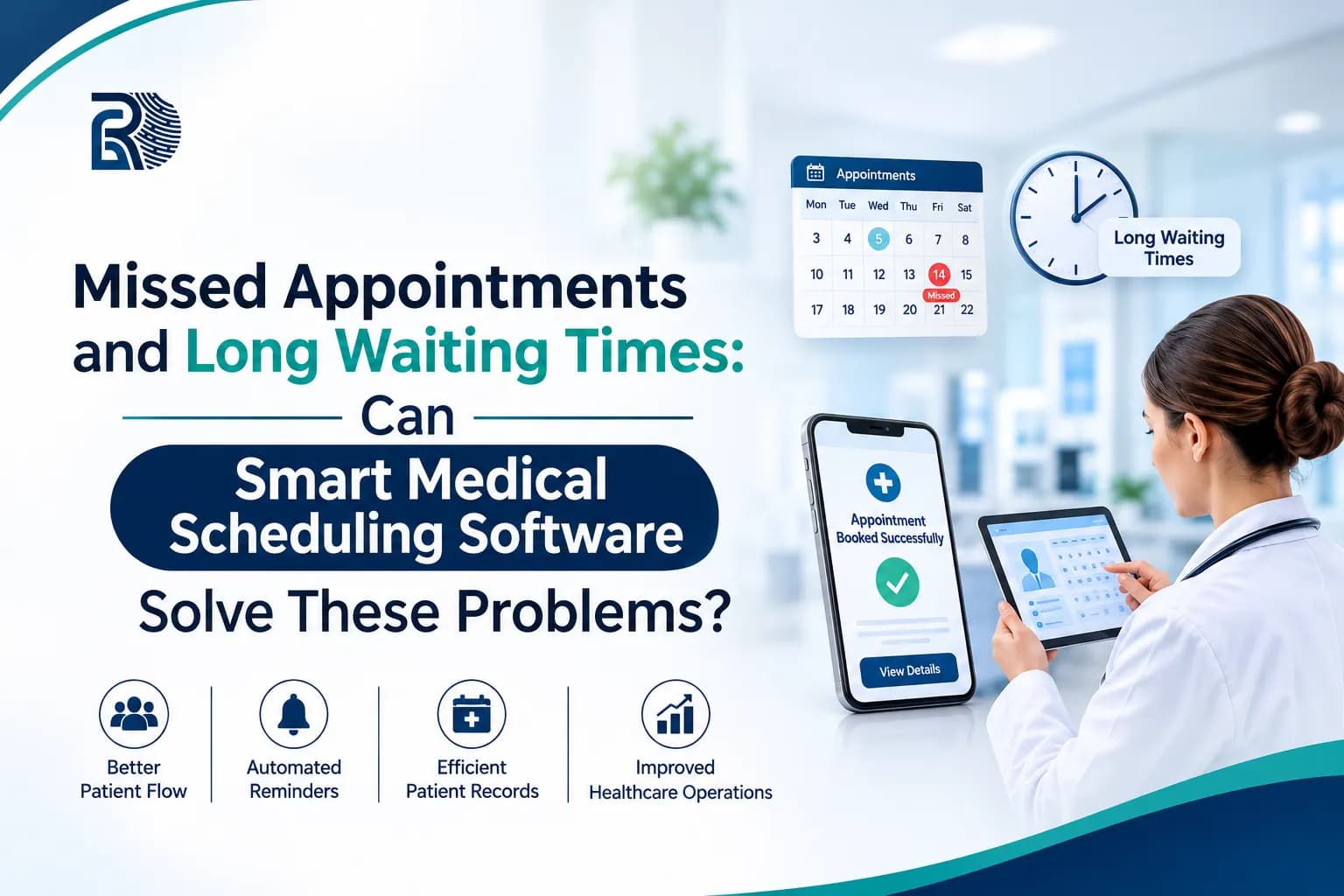
An empty chair in a hospital OPD is not just an inconvenience. It represents foregone revenue, a wasted clinical slot, a patient who may deteriorate while waiting for rescheduled care, and a downstream ripple effect that makes waiting times longer for everyone else in the queue. In India, this problem operates at a scale that most hospital administrators have learned to treat as an unavoidable cost of doing business rather than a solvable operational challenge. The numbers tell a different story. India’s private hospital no-show rate sits at approximately 32 percent according to 2026 industry analysis, compared to a global benchmark closer to 6 to 8 percent for well-managed single-specialty practices. For a 200-bed hospital running 400 OPD consultations daily, even a 20 percent no-show rate means 80 missed appointments every day, translating to between Rs 64,000 and Rs 2.4 lakh in foregone revenue daily. At that scale, the problem is not operational noise. It is a structural revenue and care quality challenge that demands a structured technological response. The drivers of India’s no-show rate are specific to the country’s healthcare context, and understanding them is a prerequisite to designing software solutions that actually address the root cause rather than the symptom. Forgetfulness is the most common driver in research studies, and it is particularly pronounced in Indian outpatient settings where appointment scheduling is still predominantly phone-based, paper-confirmed, and without automated reminders. A patient who books a specialist consultation two weeks in advance and receives no reminder in the intervening period is statistically very likely to either forget or deprioritise the appointment when the day arrives. Work commitments are the second major driver. India’s large informal and semi-formal workforce does not benefit from paid sick leave provisions that make taking time off for a medical appointment straightforward. Patients in these circumstances often book speculatively and cancel implicitly, simply not showing up rather than formally cancelling because the cancellation mechanism is as friction-heavy as the booking mechanism. Distance and transport remain significant for patients travelling from peri-urban and rural areas to urban hospital centres. An appointment that requires a two-hour journey to reach can be abandoned when the patient learns from experience that the actual consultation will involve a further two hours of waiting time before a five-minute consultation. A 2026 research study on OPD waiting time at a large government tertiary hospital in North India, with over 2,200 beds and 150 multi-specialty OPDs, found a mean waiting time of 110.86 minutes against a mean consultation time of 5.34 minutes. That ratio, twenty minutes of waiting for every minute of care, is not a problem that better appointment books solve. It is a problem that hospital software systems must address at the scheduling, flow management, and patient communication levels simultaneously. The simplest version of online medical appointment scheduling software allows patients to book appointments through a website or app without calling the front desk. This removes the friction of phone-based booking, extends booking availability beyond office hours, and allows patients to self-select the time that genuinely fits their schedule rather than accepting whatever the receptionist offers. But the difference between a basic booking tool and a smart scheduling system is significant, and the gap is where most of the no-show reduction actually happens. Smart scheduling systems incorporate automated reminder workflows across multiple channels. An appointment booked two weeks out triggers a WhatsApp or SMS reminder seven days before, another three days before, and a final reminder the morning of the appointment. Research consistently shows that multi-touch reminder protocols reduce no-show rates by 25 to 40 percent without any other intervention. For Indian patients, where WhatsApp penetration exceeds 500 million users, this channel is particularly effective because it reaches patients where they are already active. Intelligent rescheduling is the second capability that separates smart systems from basic booking tools. When a patient cancels or the system detects a likely no-show based on reminder non-response, smart scheduling software can automatically surface available slots to patients on a waitlist, filling the slot rather than losing it. This converts a potential revenue loss into retained capacity. The third capability is dynamic slot management. Rather than treating all appointment slots as equal, smart systems can weight slots by no-show risk based on historical data: appointment type, day of the week, time of day, patient history, and lead time. Specialist consultations booked more than two weeks out carry a higher no-show risk than same-week GP appointments. A system that recognises this can overbook certain slots within safe parameters, the same logic airlines have applied to yield management for decades. No-show reduction is not purely a scheduling problem. It is also a relationship problem. Patients who feel engaged with a healthcare provider, who receive personalised communication rather than generic appointment confirmations, and who have positive prior experiences with the facility are significantly less likely to miss appointments without notice. Medical CRM software development builds this relationship layer on top of scheduling infrastructure. A well-implemented medical CRM captures patient history, preferences, and communication preferences. It triggers proactive outreach for follow-up appointments based on clinical protocols rather than waiting for patients to self-book. It personalises reminder messages to include the specific doctor’s name, the specific service being received, and preparation instructions if relevant. For chronic disease management, where follow-up appointment adherence is directly linked to clinical outcomes, this relationship layer is particularly valuable. A diabetic patient who receives a reminder framing the appointment in terms of their specific HbA1c management goal is more likely to attend than one who receives a generic “you have an appointment on Tuesday” notification. Rapid Digital Growth develops custom medical CRM software for Indian hospitals and clinic chains that integrates with existing hospital information systems, capturing patient interaction data across channels and feeding it back into the scheduling and reminder workflow. The result is a system that improves with every patient interaction rather than remaining static. Reducing no-shows addresses one side of the operational efficiency problem. Reducing in-clinic waiting time addresses the other, and they are connected. Patients who experience long waiting times are more likely to no-show for future appointments. Shortening waiting times improves both patient satisfaction and future appointment adherence. Hospital software systems that address waiting time do so at the flow management level, not just the scheduling level. Queue management systems that issue digital tokens and display estimated wait times allow patients to wait outside the building, in a nearby area, or to arrive precisely when their slot is approaching rather than queuing for two hours before a five-minute consultation. This alone reduces the subjective experience of waiting substantially, even when actual throughput does not change. Appointment type sequencing is a more sophisticated intervention. Smart scheduling systems can analyse historical consultation duration data by appointment type and doctor, building realistic slot durations rather than the uniform fifteen-minute blocks that most manual scheduling systems use. When a cardiology consultation consistently runs twenty-two minutes but is blocked for fifteen, every consultation from the third slot onward is running late before noon. Accurate duration modelling is one of the highest-ROI improvements available from intelligent hospital software systems. Rapid Digital Growth has integrated queue management and flow analytics modules into the hospital software systems it builds for multi-specialty facilities, providing administrators with real-time visibility into bottlenecks across the OPD flow rather than discovering them through patient complaints. The practical path for most Indian hospital operators is not a single system purchase. It is a staged integration of capabilities that can be delivered incrementally without disrupting existing operations. The first stage is online medical appointment scheduling software with WhatsApp and SMS reminder automation. This addresses the largest single driver of no-shows, which is forgetfulness and scheduling friction, and delivers measurable results within the first quarter of implementation. The second stage is queue management and flow analytics integrated with the scheduling system, giving patients real-time waiting time visibility and giving administrators the data to identify and address bottlenecks in the consultation flow. The third stage is medical CRM software development that builds the patient relationship layer, enabling proactive follow-up outreach, personalised communication, and longitudinal patient engagement that improves adherence over time. Rapid Digital Growth designs these systems as an integrated stack rather than isolated tools, ensuring that patient data flows between scheduling, queue management, and CRM without manual data entry or integration gaps that create inaccurate records. India’s no-show rate and waiting time problem are not insurmountable. They are operational challenges with known causes and known technological responses. The 32 percent no-show rate that makes India’s healthcare system significantly less efficient than global benchmarks is addressable through the combination of smart online medical appointment scheduling software, automated multi-channel reminders, flow-aware hospital software systems, and the relationship infrastructure that medical CRM software development provides. The financial case is straightforward for any facility administrator who calculates the daily revenue loss from empty slots against the implementation cost of smart scheduling infrastructure. The clinical case is equally compelling: patients who attend appointments receive care, and patients who miss them often deteriorate until the next appointment cycle or present acutely under worse circumstances. Rapid Digital Growth works with Indian hospital groups and clinic chains to design and build the scheduling, flow management, and CRM systems that move their no-show rates from the Indian average toward the global benchmark, turning lost revenue and missed care opportunities into measurable improvements in both financial and clinical outcomes.Why India’s Appointment Problem Is Worse Than the Global Average
What Online Medical Appointment Scheduling Software Actually Changes
How Medical CRM Software Development Addresses the Relationship Layer
The Waiting Time Problem and How Smart Hospital Systems Address It
What Indian Healthcare Providers Should Build Toward
Conclusion
 ORM
ORM Services India offers extensive solutions that can reduce the effects of negative reviews and help build a better image.
Read More ORM
See how a single negative review can quietly drain your revenue, and how the right ORM services turn that damage into trust and repeat customers.
Read More